

Kratom Withdrawal: Evidence and Lab Tested Taper Steps, Safety Checks
29 August 2026

Kratom withdrawal happens, and for most people who use it daily it produces a mild to moderate set of symptoms rather than a medical emergency. Heavier, more frequent users and anyone with a prior opioid history can have a rougher course. Symptoms often begin within about half a day to one day of the last dose, peak in the following days, and warrant urgent care if you see severe dehydration, intense psychiatric distress, or thoughts of self-harm.
TL;DR:
- Withdrawal severity depends more on dosing frequency than on the total daily amount, with frequent multiple doses increasing risk.
- Physical withdrawal symptoms peak around days two to three and typically subside by day seven, but mood and sleep issues may persist for weeks.
- People with longer-term, extract-based, or high-frequency kratom use, especially with previous opioid or sedative use, face a tougher withdrawal process.
- Supportive care with symptom-targeting medications and gradual tapering, prioritizing dose spacing over dose reduction, is crucial for safe detox.
- Consistent product sourcing and accurate dosing logs, including batch testing, improve taper precision and reduce unpredictability during withdrawal.
Table of Contents
- What does kratom withdrawal feel like?
- How long does kratom withdrawal last?
- Who faces the roughest kratom withdrawal?
- What treatments do clinicians actually use?
- How do you taper off kratom safely?
- Why product consistency matters during a taper
- Nutrition and lifestyle support during recovery
- A clinician’s perspective on realistic recovery
- Choosing consistent strains while you manage kratom use
- Where to read more
- Sources
What does kratom withdrawal feel like?
Kratom withdrawal shows up in three overlapping clusters: physical symptoms, psychological symptoms, and sleep disruption. Recognising the pattern helps you tell the difference between an uncomfortable but ordinary withdrawal and something that needs a clinician’s attention.
The physical symptoms mirror what you’d expect from opioid withdrawal, because mitragynine and 7-hydroxymitragynine act on mu-opioid receptors in a dose-dependent way, even though the overall picture also carries some stimulant-like features that pure opioids don’t produce.
Common physical symptoms include:
- Nausea and, in some cases, vomiting
- Diarrhoea and stomach cramping
- Muscle aches, joint pain, and general body tenderness
- Sneezing and a runny nose
- Chills alternating with sweating
- Fine tremor, particularly in the hands
Psychologically, the picture tends to involve anxiety, irritability, a flat or low mood, restlessness, and cravings that can be surprisingly persistent. None of these are unusual for someone stopping a substance that interacts with opioid receptors daily. What catches people off guard is the sleep disruption: insomnia is common in the first week, and several people report unusually vivid or unsettling dreams once sleep does return.
There’s no validated kratom-specific withdrawal scale. Clinicians typically borrow the Subjective Opiate Withdrawal Scale (SOWS) or Clinical Opiate Withdrawal Scale (COWS), tools built for opioid withdrawal, and adapt them. That’s an imperfect fit, because kratom withdrawal has stimulant and sedative features that a pure opioid scale wasn’t designed to catch. One expert forum reviewing the evidence base recommended broadening symptom measurement rather than relying on opioid scales alone.
Prevalence in numbers: In one large survey of frequent kratom users, higher dosing frequency was linked to higher odds of 19 of the 23 withdrawal symptoms measured after stopping. Average SOWS scores across bigger samples landed in the mild-to-moderate range, but individual experiences varied widely. That variability is the key takeaway: someone dosing once daily and someone dosing six times daily are not facing the same risk profile, even on the same total daily amount.
That last point deserves repeating in plain terms: how often you dose kratom in a day matters more to withdrawal severity than how much you take in any single dose. Someone splitting a moderate daily amount into five or six doses tends to develop more withdrawal symptoms than someone taking a larger amount once or twice a day. It’s counterintuitive, but it lines up with how quickly your receptors adapt to frequent stimulation.
How long does kratom withdrawal last?
The timeline depends heavily on whether you’re missing a dose or stopping completely. A missed dose in a regular user tends to produce mild discomfort, some irritability, maybe a bit of restlessness, and it usually settles once you redose or a day passes. Full cessation is a different matter entirely, and it follows a fairly predictable arc for most people.
- Hours 0 to 12: Little to nothing noticeable yet, particularly if you were dosing once or twice daily. Early anxiety or restlessness can begin creeping in toward the end of this window.
- Hours 12 to 24 (onset): Physical symptoms typically start here. Runny nose, chills, aches, and the first wave of anxiety are common. This is when most people realise withdrawal has actually begun.
- Day 2 to 3 (peak): Symptoms are usually at their worst. Nausea, diarrhoea, muscle pain, sweating, and insomnia tend to cluster here. Cravings often spike alongside the physical discomfort.
- Day 4 to 7: Physical symptoms gradually ease. Sleep is often still disrupted, and low mood or irritability can linger even as the body starts to settle.
- Day 7 to 10: Most physical symptoms have resolved for people with shorter or lighter use histories. Energy starts returning.
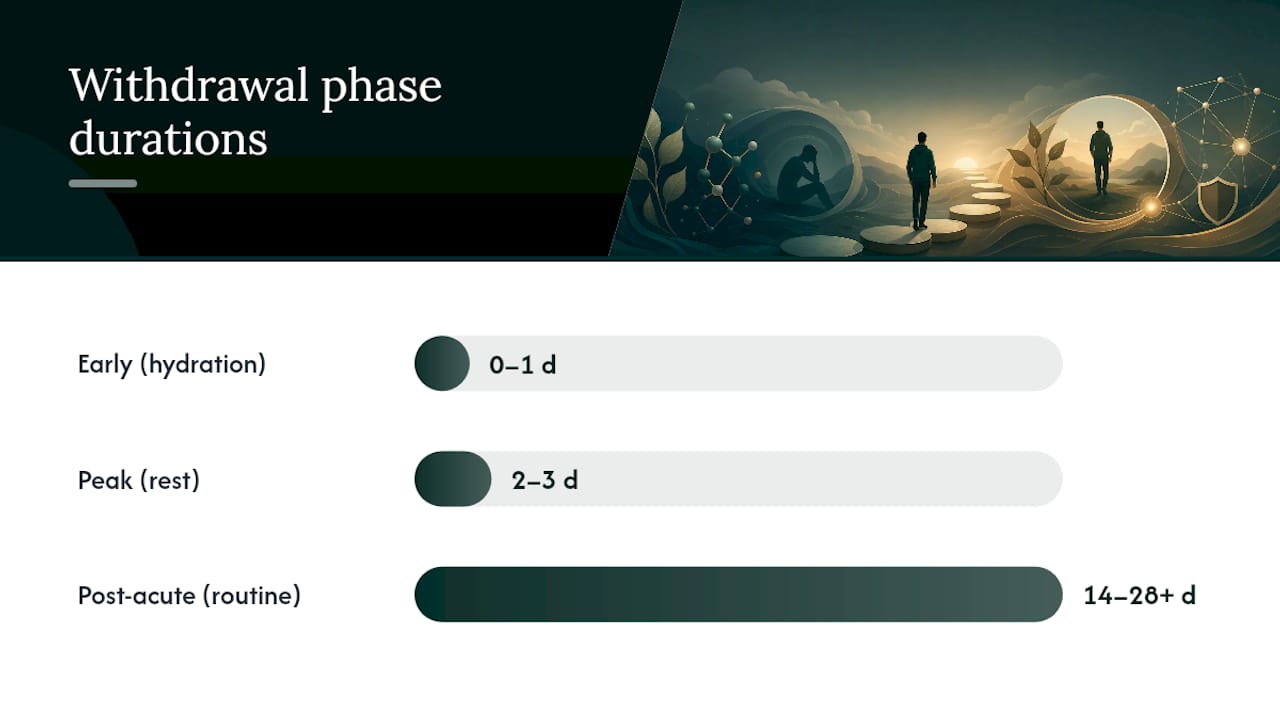
- Weeks 2 to 4 and beyond (post-acute): Mood, sleep quality, and cravings can persist in a milder, post-acute withdrawal pattern. This phase is less physically dramatic but can quietly undermine motivation if you’re not expecting it.
Several factors stretch this timeline out. Longer duration of use, extract-based products (which concentrate alkaloids and hit harder than raw leaf powder), very frequent daily dosing, and combining kratom with other sedatives like alcohol or benzodiazepines all tend to push both the peak and the tail of withdrawal further out.
Match your self-care to the phase you’re in. Early on, focus on hydration and electrolytes since diarrhoea and sweating drain both quickly. During the peak, prioritise rest and don’t schedule anything demanding if you can help it. In the post-acute stretch, keep a loose daily structure. Even simple routines like a consistent wake time or a short walk help stabilise mood when cravings are more psychological than physical.
Who faces the roughest kratom withdrawal?
Dosing frequency is the single strongest predictor identified in survey data, ahead of the actual quantity used per dose. That’s worth sitting with if you’re trying to gauge your own risk: two people on the same daily gram total can have very different withdrawal experiences depending on how many separate doses that total was split across.
Prior opioid use is another significant modifier. If you’ve previously used prescription opioids or other opioid substances, your receptors have already been shaped by that history, and kratom withdrawal can layer on top of that sensitivity rather than starting from a clean baseline. Mental health comorbidities and polysubstance use, especially regular alcohol or benzodiazepine use alongside kratom, both raise the odds of a more complicated withdrawal course.
A short checklist helps here. You’re likely at higher risk of a more severe withdrawal if:
- You dose kratom more than three or four times a day
- You’ve used kratom regularly for more than a year
- You use extract products rather than raw powder
- You also use alcohol or benzodiazepines regularly
- You have a history of anxiety, depression, or suicidal thoughts
- You’ve previously used prescription or illicit opioids
Pro Tip: Keep a simple daily log of your dose, timing, and any symptoms for one to two weeks before you plan to stop. If you do end up speaking with a clinician, that log turns a vague description into concrete data they can actually work with, and it often speeds up getting the right support.
What treatments do clinicians actually use?
Most kratom withdrawal is managed with supportive, symptom-based care rather than a single dedicated medicine, because nothing is currently approved specifically for kratom withdrawal.
For the physical symptoms, clinicians commonly reach for the same tools used in general withdrawal management: antiemetics for nausea, antidiarrhoeal medicines, simple analgesics like paracetamol for aches, and short-term use of hypnotics or low-dependence anxiolytics to help with the worst of the insomnia and anxiety. None of these treat the withdrawal itself; they blunt individual symptoms so the person can get through the peak more comfortably.
Autonomic stabilisers such as clonidine and lofexidine sometimes come into play, particularly for people with more pronounced sweating, chills, and elevated heart rate. Both work by dampening the noradrenergic surge that drives a lot of the physical discomfort in opioid-type withdrawal. They carry a real caution, though: both can lower blood pressure meaningfully, so they need monitoring, especially in anyone who’s dehydrated or already on blood-pressure medication.
Buprenorphine occupies a more complicated position. Case reports describe buprenorphine doses of 4 to 8 milligrams or higher relieving kratom withdrawal effectively, and clinician surveys show a meaningful share of practitioners who’ve treated kratom use disorder reach for it despite the absence of controlled trials confirming it works for this specific purpose. That gap matters. Starting buprenorphine introduces a full opioid agonist relationship into the picture, which carries its own dependence risk, so it’s a decision that needs a proper risk-benefit conversation with a clinician rather than a self-directed choice.
Survey data cited in reviews of kratom use disorder treatment show many clinicians who treat kratom withdrawal favour buprenorphine in practice, even though no randomised controlled trial has tested it against placebo or alternatives specifically for kratom cessation.
If you’re heading into a clinical appointment, a bit of preparation goes a long way:
- Your history of opioid use, including any prescription opioids
- Every medicine and supplement you currently take
- Any known drug allergies or sensitivities
- Your psychiatric history, including anxiety, depression, or prior suicidal thoughts
- How frequently and how much kratom you’ve been using, and for how long
How do you taper off kratom safely?
The core principle in most practical taper guidance is simple: reduce how often you dose before you reduce how much you take in each dose. Since frequency drives withdrawal severity more than quantity, spacing doses out further apart tends to be gentler than shrinking each dose while keeping the same frequency.
- Stabilise first. Spend a few days at your current, consistent dosing pattern before changing anything. Erratic dosing makes it hard to tell what’s working.
- Stretch the intervals. If you’re dosing five times a day, work toward four, then three, holding each new pattern for several days before dropping again.
- Reduce the amount gradually. Once frequency is down, begin trimming each dose by roughly 10% every few days rather than making large cuts.
- Hold at plateaus. If withdrawal symptoms flare at any step, stay at that level a few extra days before continuing.
- Avoid stopping abruptly if you’re high-risk. Anyone with frequent daily dosing, extract use, or concurrent sedative use should not cut kratom out overnight; a gradual approach is considerably safer.
These are illustrative templates, not prescriptions. A clinician can tailor the pace to your specific dosing history far better than a generic schedule can.
Self-care matters just as much as the taper mechanics. Stay ahead of dehydration, particularly if diarrhoea or sweating is heavy. Small, frequent meals sit better than large ones when nausea is present. Protect your sleep window even when insomnia makes it feel pointless, keeping a consistent bedtime helps your body recalibrate faster. Gentle movement, a walk rather than a workout, eases restlessness without adding stress to an already taxed system.
Pro Tip: When a craving hits, give it ten minutes before deciding whether to act on it. Cravings during withdrawal are intense but time-limited, and most fade or change shape within that window if you distract yourself with something physical, like a short walk or a task with your hands.
Over-the-counter aids like simple antidiarrhoeals, antiemetics, and paracetamol are reasonable for mild symptoms. Ask a prescriber for support if insomnia is severe, if anxiety is significantly interfering with daily function, or if you’re in a high-risk category from the checklist above. For relapse prevention, identify your specific triggers in advance, stress, social settings, certain times of day, and have a concrete alternative plan ready for each one before you need it.
Why product consistency matters during a taper
Trying to taper off an inconsistent product is like trying to follow a recipe where the ingredients change strength every time you buy them. If the alkaloid content in your kratom varies from batch to batch, you can’t reliably know whether a taper step is working or whether you’ve accidentally taken a stronger dose than intended.
That’s precisely why independent laboratory testing matters more during withdrawal management than at almost any other point in kratom use. Kratome tests every batch independently, which gives you a documented alkaloid profile to work from rather than a guess. Since regulatory bodies including the FDA have flagged contamination and adulteration risks in parts of the kratom market, knowing exactly what’s in your product isn’t a luxury when you’re trying to manage a taper with any precision.
A few practical checks help you keep dosing predictable while you’re adjusting your use:
- Ask for the batch certificate before you commit to a taper plan on a new supply.
- Start on the lower end of your usual dose whenever you switch strains or batches, even from a trusted source, since natural variation between harvests is normal.
- Log the exact milligrams or grams used per dose, not just “a spoonful,” so your taper steps are measurable rather than approximate.
- Keep the certificate and your dosing log together; if you do consult a clinician, both documents give them something concrete to work from.
Nutrition and lifestyle support during recovery
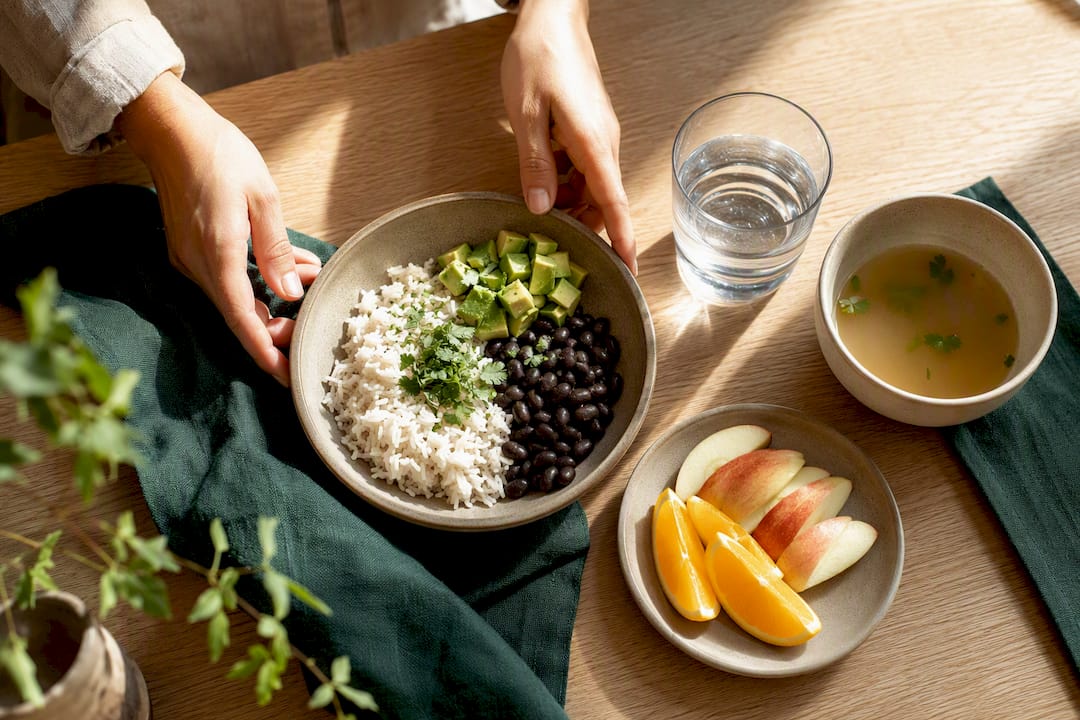
What you eat and how you structure your days has a real, if modest, influence on how withdrawal feels and how quickly mood stabilises afterward. Blood sugar dips make nausea and irritability worse, so small, regular meals rather than large infrequent ones tend to sit better during the first week or two.
Protein and complex carbohydrates support steadier energy than sugary snacks, which give a brief lift followed by a slump that can mimic or worsen withdrawal fatigue. Electrolyte replacement, whether through oral rehydration solutions or simply salted broths and fruit, matters more than most people expect given how much fluid diarrhoea and sweating can strip out in the first few days.
Caffeine is worth moderating rather than cutting entirely. Too much can amplify the anxiety and restlessness that are already part of the withdrawal picture, but going cold turkey on caffeine at the same time as kratom often adds an unnecessary second withdrawal on top of the first.
Light, regular exercise, even just a daily walk, supports mood and sleep more reliably than pushing through an intense workout you’re not ready for. Sunlight exposure earlier in the day helps reset a sleep cycle that kratom cessation tends to disrupt. None of this replaces medical care when it’s needed, but it builds a steadier foundation under whatever taper or treatment plan you’re following.
A clinician’s perspective on realistic recovery
Most people who come through kratom withdrawal describe it as genuinely unpleasant but survivable, and that matches what the evidence shows: a mild-to-moderate course for the majority, with a rougher stretch reserved for people dosing frequently or carrying an opioid history. What I’d push back on is the idea that withdrawal severity alone tells you whether to try this without support. It doesn’t.
The bigger variable is what’s happening around the withdrawal, your mental health history, whether other substances are in the mix, whether you have anyone checking in on you during the peak days. Two people with identical dosing histories can have very different experiences depending on those factors alone.
My honest advice: plan before you start, not during the worst of it. Decide in advance what counts as a reason to call a clinician rather than trying to make that judgement at 3am on day three when everything feels worse than it is. And if severe psychiatric symptoms or dehydration show up, that’s not a sign you’ve failed the taper. It’s a sign the plan needs a professional involved, sooner rather than later.
— Juridic
Choosing consistent strains while you manage kratom use
If unpredictable potency is part of what makes managing kratom use harder, the fix isn’t guesswork, it’s knowing exactly what’s in what you’re taking. Kratome tests every batch independently before it reaches you, which means the strain you buy this month behaves the same as the one you bought last month.
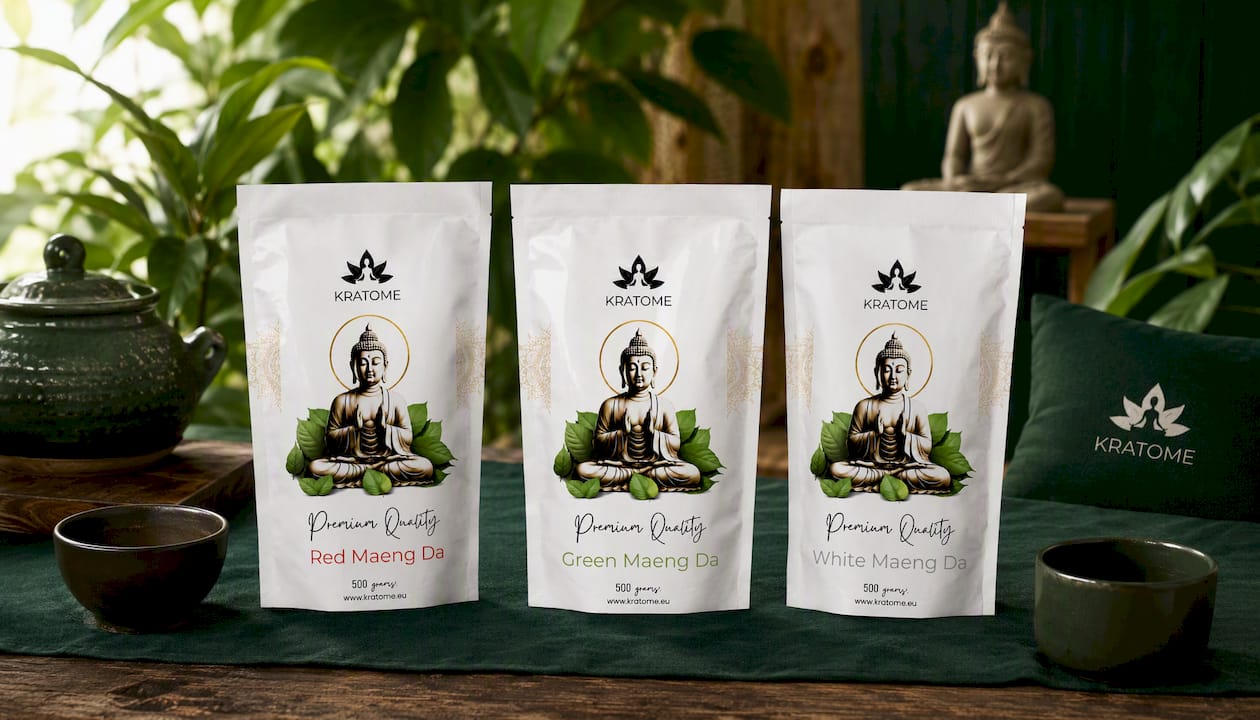
Each of Kratome’s core strains serves a different role for people managing their intake carefully:
| Strain | Commonly reported use-case | What to check before buying |
|---|---|---|
| Red Maeng Da | Calm, relaxation, easier sleep | Batch certificate for alkaloid consistency |
| Green Maeng Da | Balanced, steady daytime use | Harvest date and lab result match |
| White Maeng Da | Energy and mental clarity | Dosing notes against your log |
Every batch certificate is available on request, and Kratome’s support team answers dosing-related questions directly rather than pointing you to a general FAQ. Same-day shipping across the EU and UK means you’re not left waiting mid-taper when timing matters. If you’re working out a tapering schedule and want a supply you can actually measure against, start by checking the strain differences explained and pick the batch that matches where you are in your plan.
Where to read more
For deeper background on the science, the expert forum on kratom withdrawal and the dosing frequency study suit readers wanting primary research. For general safety guidance, Mayo Clinic’s explainer and Kratome’s kratom research overview are better starting points for patients than clinicians.
This article is general information, not a substitute for advice from a qualified doctor. Consult a qualified healthcare professional about your own circumstances before acting on anything here.
Sources
- Kratom withdrawal: Discussions and conclusions of a scientific expert forum
- Kratom for opioid withdrawal: Does it work?
